Realms of Fantasy to close.
Another one bites the dust. So, when do we get to be the champions?
Showing posts with label publications. Show all posts
Showing posts with label publications. Show all posts
Thursday, January 29, 2009

Thursday, November 20, 2008
The End of an Aeon
Sadly, Aeon Speculative Fiction Magazine is no more. Before closing their doors, they will be publishing a final anthology, called End of an Aeon, in 2009. My story, The Last Jar of Mayo at the H&P, will be included.
The press release:
19 November 2008
After four years of publication, Æon Speculative Fiction, the quarterly electronic magazine published by Quintamid Publishing Inc., is suspending publication effective immediately. All submissions are being returned, and authors of the brilliant stories currently in inventory will have the option to be published in "The End of an Æon" anthology, to be released in 2009. Editors Bridget and Marti McKenna would like to thank the SF community for making the last four years far more interesting for us and our readers than they otherwise would have been, and we look forward to continuing to work with all of you through The Internet Review of Science Fiction.
"It's been a great run. We've had a blast," said Bridget McKenna.
I suspect this is part of a trend.
The press release:
19 November 2008
After four years of publication, Æon Speculative Fiction, the quarterly electronic magazine published by Quintamid Publishing Inc., is suspending publication effective immediately. All submissions are being returned, and authors of the brilliant stories currently in inventory will have the option to be published in "The End of an Æon" anthology, to be released in 2009. Editors Bridget and Marti McKenna would like to thank the SF community for making the last four years far more interesting for us and our readers than they otherwise would have been, and we look forward to continuing to work with all of you through The Internet Review of Science Fiction.
"It's been a great run. We've had a blast," said Bridget McKenna.
I suspect this is part of a trend.
Wednesday, November 19, 2008
The Best of Southern Gothic
I've posted the ten best stories it was my honor to publish at Southern Gothic during its five year run. If you've never visited, you might want to pop over while the site is still active. There you'll find links to ten superb pieces of short fiction, each one well worth your time to read.
And if you're an agent or publisher and you agree that one or more of these authors are fantastically talented and you simply must contact them, shoot me an email and I'll be happy to put you in touch.
And if you're an agent or publisher and you agree that one or more of these authors are fantastically talented and you simply must contact them, shoot me an email and I'll be happy to put you in touch.
Friday, August 15, 2008
A Rose by Any Other Name
An interesting post, via Colleen Lindsay, about what goes on behind the scenes when it comes to choosing the title of a book. Also some interesting stuff about cover art.
I thought now would be a good time to repost the original artwork for my novel, Conundrum. This is the art created from my cover art suggestion. Ultimately, this piece was nixed in favor of a more conservative look, but I agree with the artist, Matt Stawicki, that this version is considerably better:
I thought now would be a good time to repost the original artwork for my novel, Conundrum. This is the art created from my cover art suggestion. Ultimately, this piece was nixed in favor of a more conservative look, but I agree with the artist, Matt Stawicki, that this version is considerably better:

Compare here to the published version. It's much more tame.
Matt also did the artwork for Dark Thane; notice the title of this piece - Kingdom of the Dead, which was my original title for Dark Thane.
Of course, Mark Zug did a fantastic job portraying Cael for the cover of Thieves' Guild. Dragonlance covers are often ordered before the novel is finished being written. Such was the case with both Dark Thane and Thieves' Guild. When my Guild novel was originally listed on Amazon. com, I was still only about half finished writing the novel. This was the original cover:
If you are familiar with Dragonlance and the time period in which Thieves' Guild takes place, you might notice something odd in the cityscape of Palanthas - the phallic image of the Tower of High Sorcery. It's not supposed to be there. In fact, it's been missing from the skyline for almost forty years. As soon as I saw the cover listed on Amazon, I contacted the publishers to let them know. The cover was modified to this:
Also of interest is Cael's staff. It's a cane. In my draft to that point, he was carrying a staff. Rather than ask them to revamp the cover to accomodate a staff, I changed the novel and made his weapon a cane that was magically able to extend and retract, from staff to cane, and then, of course, to sword. So that little piece of the novel was actually born from the cover art.
Tuesday, December 04, 2007
How Not to Innovate
 In a previous post, I lamented the uncertain future of the written word and begged for a new innovation to rejuvenate the publishing industry.
Meet Kindle, Amazon.com's "answer" to my prayer. Sony has a similar device.
Now, it's true that Ebooks have been around for a few years and they've never really caught on. The difference between older versions and Kindle are the features (instant wireless downloads, readability, etc.) At first glance, it looks like something I would buy.
At first glance only.
First of all, Kindle costs $399.99. That's a hell of a big pile of dough, but it's well within the range of what I spend on books each year.
What's really bothersome is the price of a Kindle book. Check this out:
The hardcover edition of Sacco and Vanzetti by Bruce Watson costs $17.13.
The Kindle edition of Sacco and Vanzetti by Bruce Watson costs $15.42.
That's a savings of just $1.71. For an electronic version that, compared to an actual paper book, costs almost nothing to produce. Sure, the technology is bound to have associated costs - licenses and whatnot - but compared to the cost of printing and shipping 10,000 hardback books, 10,000 Kindle books probably don't cost more than a couple of cents per book.
In my opinion, few people are going to spend $400 for an electronic book reader (no matter how cool) and then have to turn around and pay almost as much for an electonic book as they'd pay for the real thing. I know I wouldn't. If I'm slapping down $400 for a Kindle, I wouldn't pay more than $4 for a book. If that much.
The only thing I like about the Kindle is that it removes the giant corporate publishers and distributors from the publishing model. With technology like this, all that would be needed from a publishing company is a good editor, a copy editor, and a typesetter. Which means that eventually small publishers will be able to compete with big publishers. Once that happens, more books and better books will become available. And that's a good thing.
But before that can happen, a Kindle book (or its equivalent) has to reflect the real cost of production. The real cost is about 40% of the cover price - that is roughly the price the distributor pays the publisher for each copy of a book. The other 60% that you pay for a book goes to the distributor and the bookseller.
Of the first 40%, the author gets anywhere between 4% and 12%, on average. Bigger authors get a bigger cut. So take 12% off, leaving 28% going to the publisher to cover the costs of editing, typesetting, printing, and promotion, with something left over for profit or they go out of business. With an e-book, you get rid of the cost of printing, and since most publishers spend next to nothing on promotion, and since you lose the cost to the author of the return reserve, you end up with an ebook costing maybe 25% of the cover price to produce to the electronic file stage.
Bookstores take their cut of the cover price, but since Ebooks cost next to nothing to store (since all you're really housing is one copy), and since Ebooks don't require employees to sell, the seller's cut of the price should drop, too. So let's give them 25% of the cut to run the website, pay for bandwidth and wireless capacity, and make a profit. That brings us to 50% of cover price.
But since hardbacks and trade paperbacks are priced by quality of print production, the real value of an electronic book should be based on 50% of the cover price of the cheapest edition - the mass market paperback. Average price of a mass market book is $6.99, therefore the base price of an e-book should be $3.50. I can see paying a bit more for more popular authors to cover their larger cut of the royalties, because they are more in demand and therefore can command a higher price (or negotiate with the publisher for a lower price in the hope of increasing number of sales). Thus my $4 top price.
$15 for an e-book is certain, in my opinion, to kill the technology before it has a chance to get off the ground. Not to mention the fact that a $400 Ebook machine limits your customer base to the upper third of readers. It won't do a thing to get more people reading, and getting more people reading is where we should be headed with new technologies, not excluding potential new readers by pricing them out of the reading market.
If I were Amazon, I'd practically give Kindles away and then sell e-books significantly cheaper than paper books. You do that and you'll corner the publishing market, especially if Amazon publishes the books and take the publisher's cut for themselves. It's almost like they don't want to succeed, or they're afraid of succeeding, since success will utterly rewrite the way books are produced. And that's a scary thing for everybody - booksellers, publishers, and authors alike.
Thursday, July 19, 2007
The Pride and the Prejudice
Frustrated writers have complained for years that this or that great writer couldn't get published today. Well....
LONDON (Reuters) - Even Jane Austen would have trouble finding a publisher today, a struggling author revealed Thursday.
David Lassman sent off to 18 publishers assorted chapters from Austen novels in which he changed just the titles and the names of the characters.
He called himself Alison Laydee after Austen's early pseudonym "A Lady."
Seventeen publishers rejected or ignored his bid for literary glory. Only one spotted the ruse and told him not to mimic "Pride and Prejudice" so closely.
Lassman, who decided on the experiment when struggling to get his own novel published, told British media: "Getting a novel accepted is very difficult today unless you have an agent first. But I had no idea of the scale of rejection poor old Jane suffered."
(hat tip to Robie)
LONDON (Reuters) - Even Jane Austen would have trouble finding a publisher today, a struggling author revealed Thursday.
David Lassman sent off to 18 publishers assorted chapters from Austen novels in which he changed just the titles and the names of the characters.
He called himself Alison Laydee after Austen's early pseudonym "A Lady."
Seventeen publishers rejected or ignored his bid for literary glory. Only one spotted the ruse and told him not to mimic "Pride and Prejudice" so closely.
Lassman, who decided on the experiment when struggling to get his own novel published, told British media: "Getting a novel accepted is very difficult today unless you have an agent first. But I had no idea of the scale of rejection poor old Jane suffered."
(hat tip to Robie)
Tuesday, February 07, 2006
Not So Different After All
 It's pathetic, really. JT Leroy, it turns out, is a 40-year-old woman, not a 25-year-old male prostitute. JT allegedly was the brilliant author of some books supposedly inspired by his life on the street as a teen prostitute and drug addict. If this sounds strikingly familiar, it's because James Frey (A Million Little Pieces) was recently exposed as a fraud for claiming his fiction was the truth. Plus he pissed off Oprah.
As the article states, there seems to be something of an epidemic of fraud in the world of literary greatness, including Nasdijj, the Navajo writer who appears to actually be a white boy named Tim.
It turns out JT was really a woman who couldn't figure out any other way to get her work noticed and so decided to create living fiction in the form of a Cinderella boy and his glass book of slippers. Because people are oh so willing to believe Cinderella stories like this and A Million Little Pieces. Life is brutal, ugly and short, and everyone wants to believe in second chances and miracles.
But if the actions of these writers are disgusting, it is no less disgusting than the industry that created them. Apparently, Laura Albert wasn't good enough to tell her stories, but tragic, young JT was. Good enough, in fact, for The Heart is Deceitful Above All Things (there's irony for ya) to get a movie deal and for JT to be invited to write an episode of Deadwood. I doubt, especially now, whether Laura will be invited to take JT's place. But the truth is, she probably wouldn't have been invited in the first place were it not for JT. It wasn't her stories that sold, it was JT's story that sold her stories.
The publishing industry is often accused of being more interested in style than substance. It is difficult to sell a book, but easy to sell an author if that author has an interesting backstory, something Romantic with a capital R to capture the interest of the celebrity-addled public. Who would you rather read - the guy who spent 5 years living on the street writing his life story on the back of grocery bags while turning tricks to feed his heroin habit, or the guy who graduated from the University of Iowa with a masters in creative writing? Never mind that you can hardly
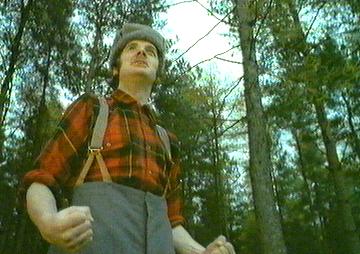 find paper grocery bags anymore - that should ring your alarm bell right away, but hell, it sounds good, especially if he is 24 and looks good on the back of the dust cover in a forest somewhere staring boldly at what lies ahead.
So while I blame the authors for selling their souls, I can't really blame them entirely. I must also blame the industry that allowed and encouraged this to happen and rewarded those who got away with it. I have a feeling that it happens far more often than anyone is willing to admit. Anytime you hear a backstory that sounds too good to be true, it probably is. A long time ago, a literature teacher asked us not to read the author bio before reading the stories - she warned that it can unduly influence your opinion of the author's work.
 She was right. And although I don't expect it to ever happen in the publishing industry, I wish that every novel and story would have to pass a blind reading before being accepted or rejected. That would go a long way to improving the quality of what is published every year.
But like I said, it's not gonna happen.
Subscribe to:
Posts (Atom)